SEWER PROBLEM GUIDE — IRVINE

Tree Roots in Sewer Line
in Irvine, CA

Tree roots growing inside an underground sewer pipe can cause repeated clogs, slow drains, sewage backups, and damage around existing pipe openings. The problem often develops out of sight, making it difficult to understand why a sewer line continues blocking after professional cleaning.

If you suspect tree roots in your sewer line in Irvine, CA, the most important question is whether the roots are simply restricting wastewater flow or have entered through a pipe defect that also needs repair.

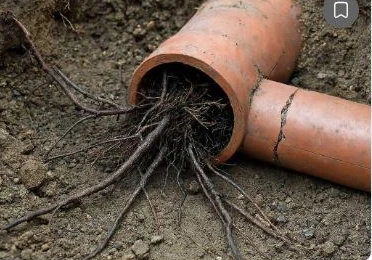
Tree roots generally enter sewer piping through existing cracks, deteriorated joints, separated connections, or other openings. Once inside, they can grow, trap waste, and restrict drainage.

Removing the roots may restore flow, but it does not necessarily repair the opening they used to enter. Depending on the pipe condition, the next step may involve monitoring, localized pipe repair, internal lining, or replacement.

📍

Proudly Serving
Irvine, CA
And Surrounding
Communities

⬡Local Irvine
Experts
⚙Advanced
Diagnostic Equipment
♟Honest Recommendations
& Lasting Solutions
◷Fast Response
For Urgent Problems
☎

Call About Tree Roots in Your Sewer Line: +1 (321) 425-1571

Describe your drainage symptoms, previous cleaning work, and whether root intrusion has been confirmed by a sewer camera inspection.

Contact Us →
IRVINE SEWER PROBLEM GUIDE

How Do Tree Roots Get Inside Sewer Pipes?

Roots naturally explore surrounding soil for moisture, oxygen, and nutrients.

Underground sewer pipes can create favorable conditions around leaks or defective connections. When an opening exists, small roots may enter and continue growing inside the pipe.

The problem is not necessarily caused by a tree growing directly above the line. Root systems can extend well beyond the visible canopy, depending on the species and soil conditions.

Roots Enter Through Cracks and Openings

Roots usually enter through vulnerabilities already present in underground sewer piping.

These openings may include small cracks, deteriorated seals, faulty connections, or separated joints.

A tiny root can enter a narrow opening and increase in size as it grows.

Over time, the expanding root may contribute to a wider defect or additional stress around the entry point.
Damaged Pipe Joints Allow Root Intrusion

Older pipes assembled from multiple sections have joints that can deteriorate or shift.

When a joint is no longer properly sealed or aligned, it may create a pathway into the sewer line.

Roots can grow through the opening and extend downstream.

Removing the visible root mass does not necessarily restore the damaged joint.

Moisture and Nutrients Encourage Root Growth

Sewer systems carry wastewater containing moisture and nutrients.

Once a root reaches an opening, these conditions may support continued growth.

Root masses can become dense enough to restrict the pipe or trap waste passing through it.

Can Roots Enter PVC Sewer Pipes?

Yes, but the condition of the pipe and its connections matters.

Properly installed and intact PVC piping is less vulnerable to the joint defects associated with some older systems.

However, damaged PVC, separated connections, or faulty fittings can still provide entry points.

Pipe material alone does not eliminate the possibility of root intrusion.

Warning Signs of Tree Roots in a Sewer Line

Root intrusion may begin with occasional slow drainage before developing into a significant obstruction.

These symptoms can also result from grease, debris, pipe misalignment, or other restrictions. A professional evaluation is needed to identify the cause.

Tree roots growing inside an underground clay sewer pipe

Recurring Sewer Blockages

One of the more concerning patterns is a sewer line that repeatedly blocks after cleaning.

Cutting roots may reopen the wastewater passage, but growth can return when an entry point remains.

The time between blockages varies with the defect, growing conditions, and amount of root intrusion.

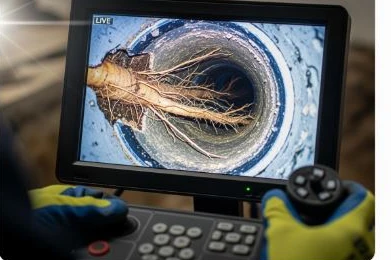
Sewer camera monitor showing tree roots inside a pipe

Multiple Slow Drains

When several plumbing fixtures drain slowly at the same time, a restriction may exist in shared drainage piping.

Roots inside the main building drain or sewer lateral can affect more than one fixture.

However, several slow drains do not prove roots are present.

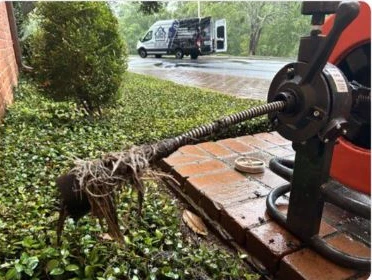
Root removal equipment extracting roots from a sewer line

Gurgling Toilets and Fixtures

A restricted sewer line can disturb the movement of air and wastewater.

Gurgling sounds may occur when water drains from connected fixtures.

These sounds are not unique to root intrusion, but they provide useful information when combined with other symptoms.

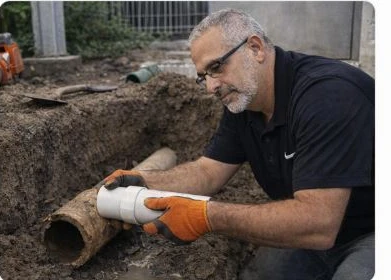
Technician repairing a root-damaged sewer pipe

Sewage Backing Up Into Lower Fixtures

Severe root growth can restrict wastewater flow enough to contribute to backups.

Water may return through a shower, floor drain, or toilet when connected fixtures are used.

If sewage enters occupied areas, stop using affected plumbing fixtures and keep people away from contaminated water.

For a closer explanation of these symptoms, read our sewer backup repair guide.

Tree roots growing inside an underground clay sewer pipe

Repeated Cleaning Without a Lasting Solution

If the same sewer line requires frequent root cutting, the underlying entry point may still be present.

Repeated cleaning can sometimes be part of a maintenance plan, but it should not automatically replace consideration of a suitable permanent repair.

IRVINE SEWER PROBLEM GUIDE

Can Tree Roots Damage an Underground Sewer Pipe?

Root intrusion and pipe damage are closely related, but their relationship should be understood carefully.

Roots commonly exploit openings that already exist. As they grow, they may widen certain gaps or place additional pressure on damaged areas.

The seriousness depends on the original defect, pipe material, root growth, and surrounding conditions.

Enlarging Existing Cracks

A root entering a small crack can gradually grow thicker.

In some circumstances, that growth may worsen the opening.

However, the appearance of roots does not prove that the entire pipe has lost structural integrity.

Worsening Defective Joints

Roots entering a damaged joint may contribute to further separation or debris accumulation.

The joint condition should be evaluated after the obstruction is addressed.

A localized defect may require less extensive work than widespread pipe deterioration.

Restricting Wastewater Flow

A root mass can occupy space inside the pipe and trap toilet paper, grease, and other waste.

This may lead to recurring clogs or backups.

The restriction can become severe even when the surrounding pipe remains mostly serviceable.

Contributing to Other Sewer Problems

Root intrusion may occur alongside corrosion, displaced joints, poor alignment, or deteriorated pipe walls.

Repair recommendations should consider these conditions rather than treating all damage as root-related.

A DIAGNOSIS-LED APPROACH

How Tree Root Intrusion Is Diagnosed

A sewer inspection helps determine whether roots are actually present and what condition allowed them to enter.

The goal is to separate temporary obstruction removal from repairing a damaged pipe.

Sewer camera monitor showing tree roots inside a pipe
01

Review the Drainage History

A technician may ask when slow drainage began, which fixtures are affected, and how often blockages return.

Previous cleaning reports are useful, particularly when roots have already been removed.

02

Evaluate the Sewer Cleanout

A sewer cleanout may provide access for professional cleaning and inspection equipment.

Its location and condition affect the available methods.

Some properties require alternate access.

03

Perform a Sewer Camera Inspection

A CCTV camera can reveal root growth inside accessible piping.

The footage may show roots entering through a joint, crack, or other opening.

If the pipe is heavily obstructed, cleaning may be needed before a camera can travel through the affected section.

Our sewer camera inspection page explains how visible findings are interpreted.

04

Locate the Root Entry Point

Compatible locating equipment may help estimate the underground position of a visible defect.

This information can be useful when planning a targeted repair.

A locating signal does not replace evaluation of the surrounding pipe condition.

05

Assess the Remaining Pipe

After roots are removed, further inspection may reveal whether the pipe has an isolated defect or several deteriorated sections.

That distinction helps determine whether monitoring, spot repair, rehabilitation, or replacement is appropriate.

IRVINE SEWER PROBLEM GUIDE

How Are Tree Roots Removed From Sewer Lines?

Root removal methods vary according to pipe condition, access, obstruction size, and available equipment.

The immediate objective is to restore sufficient wastewater flow without unnecessarily damaging the existing pipe.

Root removal equipment extracting roots from a sewer line

Mechanical Sewer Root Cutting

Mechanical cleaning equipment may use suitable cutting attachments to remove roots from accessible piping.

The tool must be appropriate for the pipe size and condition.

Mechanical cutting can reopen a restricted line, but it does not automatically seal cracks or defective joints.

Hydro Jetting for Root-Related Blockages

Hydro jetting uses pressurized water to clean suitable sewer piping.

Specialized equipment may help remove remaining debris and certain root growth.

However, high-pressure cleaning may be unsuitable for severely deteriorated or structurally weak pipe.

The contractor should evaluate the line before choosing the equipment and operating pressure.

Cleaning Followed by Camera Inspection

When roots obstruct the view, cleaning may allow a camera to inspect the pipe more thoroughly.

The follow-up inspection can help identify visible cracks, displaced joints, and other defects.

It may also show whether substantial root growth remains.

Why Root Removal May Be Temporary

Cutting roots removes some or all of the existing obstruction.

If the opening into the pipe remains, roots may grow back through it.

This is why recurring root problems often deserve investigation beyond routine cleaning.

☎

Call to Discuss Recurring Sewer Root Blockages: +1 (321) 425-1571

Contact Us →
IRVINE SEWER PROBLEM GUIDE

When Does Root Intrusion Require Sewer Pipe Repair?

Not every root obstruction requires replacing the sewer line.

The decision depends on whether the roots entered through a significant defect, how much pipe is damaged, and whether the remaining sections are serviceable.

Technician repairing a root-damaged sewer pipe

Localized Joint Repair

An isolated damaged joint may be suitable for targeted repair.

The work may involve exposing the affected section and installing compatible replacement piping or connections.

This can be reasonable when the surrounding line remains in good condition.

Cracked Sewer Pipe Repair

If roots entered through a crack, the severity and location of the fracture should be evaluated.

Some defects may qualify for localized repair or rehabilitation.

See our cracked sewer pipe repair guide for further discussion.

Sewer Pipe Lining

Certain existing sewer pipes may qualify for internal rehabilitation.

Pipe lining can address some defects without removing the entire pipe run.

However, lining requires suitable pipe geometry, preparation, and structural conditions.

A severely collapsed or badly misaligned pipe may not qualify.

Sewer Line Replacement

Replacement may be necessary when damage is extensive or a significant portion of the pipe is no longer serviceable.

The work could involve replacing a short section or a longer run.

An inspection should support the proposed scope.

CHOOSING THE RIGHT APPROACH

Root Removal vs. Sewer Pipe Repair vs. Replacement

The three approaches address different needs.

MethodMain purposeImportant limitation
Root removalClears root obstruction and restores flowMay leave the entry point untreated
Localized repairCorrects a defined damaged sectionDoes not correct unrelated defects
Pipe liningRehabilitates a suitable existing pipeRequires suitable geometry and preparation
Sewer replacementInstalls new piping where existing pipe is unsuitableMay require excavation and restoration

The appropriate method depends on actual pipe condition.

Repeated root intrusion should not automatically lead to complete replacement when only a small section is defective.

Equally, repeated cutting may be an incomplete solution when significant damage is already known.

IRVINE SEWER PROBLEM GUIDE

Should You Remove a Tree Near a Sewer Line?

Removing a tree is not automatically necessary when roots are found inside sewer piping.

Roots can extend considerable distances underground. The tree nearest the visible cleanout may not be the only possible source.

Furthermore, removing a tree does not repair an existing crack or defective sewer joint.

Identify the Pipe Defect First

Before making landscaping decisions, determine where roots entered the line and whether the piping needs repair.

Correcting the entry point may address the underlying sewer problem without removing a healthy tree.

Consider Arborist Advice

If a tree's roots interfere with underground utilities, a qualified arborist may help assess pruning or landscaping options.

Extensive root cutting can affect tree health and stability.

Property owners should avoid major root excavation without understanding those risks.

Check HOA and Property Restrictions

Some Irvine properties have landscaping requirements or HOA rules.

Protected trees, common-area landscaping, and shared property may require approvals before changes are made.

The sewer repair plan and landscaping decisions should be coordinated when necessary.

TAILORED TO THE PROPERTY

Tree Roots in Residential Sewer Lines

Root intrusion can affect underground laterals serving detached homes, townhouses, and other residential properties.

The location of the pipe may influence how damage is investigated and repaired.

Sewer Pipes Beneath Landscaped Yards

An underground lateral beneath a planted yard may be accessible for targeted excavation.

However, irrigation lines, nearby roots, and other underground services still need to be considered.

Pipes Running Under Driveways

A damaged section beneath concrete can be more disruptive to access.

Where the pipe is suitable, certain rehabilitation methods may reduce continuous excavation.

The chosen method must correct the actual defect.

Shared Residential Developments

In some condominium or HOA properties, sewer lines serve multiple units or pass through common areas.

Responsibility and access permissions should be clarified before major work.

IRVINE SEWER PROBLEM GUIDE

Commercial Sewer Root Intrusion

Commercial properties can have landscaped parking areas, larger sewer runs, and shared drainage systems.

Root intrusion may interfere with tenant spaces, restrooms, or building operations.

Repair planning should consider pipe access, wastewater interruptions, and safety around occupied areas.

A property manager may need to coordinate inspection and repairs with multiple affected users.

Cost of Tree Root Sewer Repair in Irvine, CA

Costs depend on whether the problem requires cleaning alone or physical correction of damaged piping.

A removable root obstruction is different from a cracked sewer lateral beneath a driveway.

Discuss Your Project →
♧

Extent of Root GrowthDense roots and repeated blockages may require additional cleaning and investigation. The quantity of roots alone does not determine the full repair scope.

⚙

Sewer AccessAn accessible cleanout can simplify inspection and maintenance. Buried or unsuitable access may require additional work.

✚

Pipe DamageA small defective joint may be handled differently from several broken or deteriorated sections. Repair recommendations should be based on confirmed conditions.

⚒

Excavation and RestorationPipe depth, surface materials, landscaping, and nearby utilities affect the work. Restoring concrete, paving, or irrigation may add to the project cost.

▤

Inspection and Permit RequirementsCamera inspection, locating, and any required permits or inspections can influence the scope. An estimate should clarify which activities are included.

☎

Call to Discuss Sewer Root Removal and Repair Costs: +1 (321) 425-1571

Contact Us →
PROPERTY-SPECIFIC PLANNING

Irvine Sewer Laterals, Landscaping, and Local Requirements

Sewer root intrusion should be evaluated according to the actual property and sewer system layout.

Irvine contains detached homes, multifamily buildings, landscaped developments, and commercial properties with different underground conditions.

Sewer Lateral Responsibility

A sewer lateral connects a building's drainage system to the receiving sewer system.

Ownership and maintenance responsibility depend on utility rules, property records, easements, and other applicable arrangements.

Do not assume responsibility ends at the visible property boundary.

Plumbing Permits for Physical Pipe Repair

Under City of Irvine guidance, covered sewer line repairs and replacements generally require appropriate plumbing permits.

Routine obstruction clearing may be treated differently from replacing underground piping.

The requirements should be confirmed for the proposed work.

Irvine Neighborhood Context

Woodbridge, Northwood, Turtle Rock, University Park, Westpark, and other Irvine neighborhoods contain different property designs and landscaping arrangements.

A neighborhood's age or tree coverage does not establish whether an individual sewer pipe has roots inside it.

Inspection findings should guide the decision.

Shared and HOA Landscaping

Repair work affecting common landscaping or shared sewer lines may require additional approvals.

Clarify responsibility and access before authorizing major excavation.

A PRACTICAL MAINTENANCE GUIDE

Preventing Tree Roots From Returning to a Sewer Line

Long-term prevention begins with understanding why roots were able to enter the pipe.

Correct Suitable Entry Points

When a crack or defective joint is responsible for intrusion, an appropriate physical repair may reduce future entry.

The selected method depends on damage severity and pipe condition.

Maintain Accessible Sewer Cleanouts

Cleanouts should remain accessible for professional inspection and maintenance.

Do not bury them beneath permanent landscaping or structures without considering applicable plumbing requirements.

Avoid Repeated Cleaning Without Reviewing the Cause

If roots return frequently, request an explanation of whether the entry point has been identified.

A maintenance-only plan may be reasonable in some circumstances, but property owners should understand its limitations.

Use Sensible Landscaping Practices

Tree selection, planting locations, and appropriate root management can be discussed with qualified landscaping professionals.

However, there is no simple planting-distance rule that guarantees roots will never reach underground sewer piping.

QUESTIONS BEFORE YOU APPROVE WORK

Choosing a Contractor for Root-Damaged Sewer Pipes

A useful recommendation should distinguish root removal from actual pipe repair.

Ask whether the roots were observed on camera and whether the entry point was identified.

If excavation is recommended, ask whether the damage is localized and how the repair length was determined.

If lining is proposed, ask whether the existing pipe meets the method's suitability requirements.

For replacement, request an explanation of the condition of the remaining pipe.

Verify appropriate contractor licensing for the proposed plumbing work and confirm whether permits or inspections are required.

Frequently Asked Questions About Tree Roots in Sewer Lines

Have a different question? Contact Us →
Can tree roots break a sewer pipe?

Roots commonly enter through openings or defects already present in the pipe.

As they grow, they can widen certain gaps and place additional stress on damaged areas.

However, discovering roots does not automatically mean they caused the original crack or that the entire sewer line needs replacement.

A camera inspection and condition assessment can help determine the extent of damage.

How do I know if tree roots are blocking my sewer line?

Recurring backups, multiple slow drains, and repeated clogs after cleaning can be warning signs.

However, grease, debris, pipe misalignment, and other defects can produce similar symptoms.

A sewer camera inspection may reveal visible root growth and help identify the entry location.

Professional cleaning may be necessary before the camera can examine the pipe adequately.

Will cutting sewer roots permanently fix the problem?

Not necessarily.

Root cutting may restore wastewater flow, but it usually does not repair the crack, joint, or opening that allowed roots to enter.

If the entry point remains, roots may grow back.

The next step depends on pipe condition, recurrence, and whether a physical repair is justified.

Can hydro jetting remove roots from a sewer pipe?

Certain professional hydro-jetting systems can remove some root growth and debris from suitable piping.

However, equipment selection must account for pipe condition.

Aggressive cleaning can be unsuitable for severely deteriorated pipes.

Jetting removes the obstruction but does not necessarily correct the entry point or underlying structural damage.

Can roots grow inside PVC sewer pipes?

Yes, when damaged pipe, defective fittings, or separated connections provide access.

Intact and properly installed PVC piping generally does not have the same vulnerability as an open crack or damaged joint.

The actual condition of the pipe matters more than simply identifying its material.

Do I need to remove the tree causing sewer root problems?

Not automatically.

Removing a tree does not repair a cracked pipe or defective sewer joint.

The entry point should be investigated first.

If landscaping changes are being considered, an arborist can help evaluate root management and tree health, particularly where major root cutting could create stability concerns.

Can pipe lining stop tree roots from entering my sewer?

A suitable lining system may rehabilitate certain damaged pipe sections and address openings associated with root intrusion.

However, lining requires adequate pipe preparation, geometry, and structural suitability.

A severely collapsed or badly misaligned pipe may require another repair method.

A qualified contractor should explain whether lining can correct the confirmed defect.

How much does it cost to remove tree roots from a sewer line in Irvine?

The cost depends on access, root severity, equipment, pipe condition, and whether additional inspection is necessary.

Root removal alone may involve less work than replacing a damaged underground pipe.

When physical repairs are proposed, depth, excavation, materials, permits, and restoration can significantly change the scope.

A project-specific estimate is more useful than an unsupported flat price.

Are permits needed to repair root-damaged sewer pipes in Irvine?

Covered sewer line repairs and replacements generally require plumbing permits under City of Irvine guidance.

Routine clearing of stoppages may fall under different rules.

The requirements depend on the actual work, location, and jurisdiction.

Confirm permit and inspection obligations before excavation or replacement begins.

Can tree roots cause sewage to back up into my home?

Yes. A root mass can trap waste and restrict flow through a shared drain or sewer lateral.

If the restriction becomes severe, wastewater may return through connected lower fixtures.

Stop using affected plumbing fixtures if sewage is backing up and keep people away from contaminated areas.

A professional evaluation can help determine whether roots or another problem caused the backup.

Call About Tree Roots in Your Sewer Line in Irvine, CA

Tree roots inside underground sewer piping can cause recurring blockages, slow drainage, and sewage backups.

Removing the roots may restore flow, but the underlying pipe opening should also be considered when problems repeatedly return.

The appropriate solution may involve cleaning, localized repair, pipe lining, or replacement, depending on the condition and extent of the damage.

If you've experienced repeated sewer blockages or a camera inspection has revealed root growth inside your sewer lateral, describe the findings and ask about the next appropriate step.

Call to Discuss Tree Roots in Your Sewer Line: +1 (321) 425-1571

Irvine, California — Sewer Root Intrusion, Removal, and Pipe Repair Information

☎   Call Now +1 (321) 425-1571Schedule an Inspection
☎   Call Now +1 (321) 425-1571