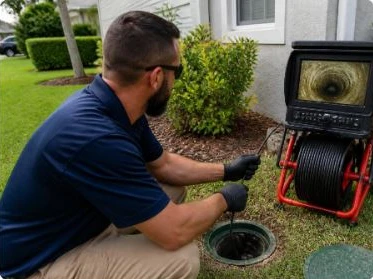
SEWER REPLACEMENT SERVICE IN IRVINE

Sewer Line Replacement
in Irvine, CA

An underground sewer line can sometimes be repaired without replacing the entire pipe. But when damage is extensive, the pipe has lost its structural strength, or repeated failures affect several sections, sewer line replacement may be the more practical long-term solution.

For property owners in Irvine, California, replacing a sewer line involves more than installing new piping. The project may require an inspection, underground utility locating, excavation or trenchless access, correct pipe installation, connections, permits, and restoration of affected surfaces.

The first decision is whether the damaged pipe needs a partial replacement or a complete replacement. That depends on its condition, location, material, and the amount of piping affected.

A properly planned project should address the underlying failure while avoiding unnecessary excavation or replacement of serviceable pipe sections.

📍

Proudly Serving
Irvine, CA
And Surrounding
Communities

⬡Local Irvine
Experts
⚙Advanced
Diagnostic Equipment
♟Honest Recommendations
& Lasting Solutions
◷Fast Response
For Urgent Problems
☎

Call to Discuss Sewer Line Replacement: +1 (321) 425-1571

Describe your sewer problem, previous inspection findings, and any known damage to the underground pipe.

Contact Us →

When Does a Sewer Line Need Replacement?

A sewer line generally needs replacement when the existing pipe can no longer carry wastewater reliably and a suitable localized repair or rehabilitation method cannot reasonably correct the problem.

Replacement should be based on evidence of pipe condition rather than age, repeated cleaning bills, or one isolated blockage alone.

Severe Pipe Deterioration

Some underground pipes experience deterioration over many years of service.

Cast iron may corrode internally. Clay piping may develop cracks or joint defects. Plastic piping can fail because of damage, improper support, or other installation conditions.

A limited defect does not necessarily justify replacing the entire line.

However, significant deterioration along several sections may make repeated repairs less practical.
Multiple Damaged Sections

A sewer line with several fractures, displaced joints, or deteriorated sections may need more extensive work than a single spot repair.

If an inspection finds multiple serious defects, replacing the affected run may address problems that would otherwise require repeated excavation.

The decision should consider how much of the existing pipe remains serviceable.

Collapsed Sewer Pipe Sections

A collapsed pipe has lost enough structural integrity to significantly restrict wastewater flow.

Major collapse can prevent cleaning equipment or a camera from passing through the line.

A severely failed section may require excavation and physical replacement.

If you suspect this condition, read our guide to collapsed sewer line problems for more about the causes and diagnostic considerations.

Improper Pipe Slope or Alignment

Gravity sewer systems depend on proper slope to transport wastewater and solids.

Ground movement, settlement, or poor installation may cause sections to sag or separate.

A low section, often called a belly, can allow wastewater and solids to collect.

Where alignment problems are severe, replacing and repositioning the affected pipe may be necessary.

Repeated Failures After Previous Repairs

A sewer line that continues to develop serious problems after earlier repairs may need a broader evaluation.

One repair may have addressed only an isolated defect while leaving nearby damaged sections in place.

Before recommending complete replacement, the condition of the remaining pipe should be assessed.

IRVINE SEWER LINE GUIDE

Partial vs. Complete Sewer Line Replacement

Not every damaged sewer line needs to be replaced from the building to the receiving sewer system.

The correct replacement length depends on where the failures are located and whether the remaining pipe can continue functioning reliably.

Partial Sewer Line Replacement

Partial replacement involves removing and replacing a defined section of sewer piping.

It may be appropriate when damage is limited to one area and the adjacent pipe remains serviceable.

For example, an isolated section with severe joint separation may be replaced while retaining sound piping upstream and downstream.

The work must include suitable transitions and connections between the new and existing materials.

A partial replacement does not correct defects beyond the replaced section.

Complete Sewer Line Replacement

Complete replacement involves replacing the full identified sewer run within the agreed scope.

This may be considered when pipe deterioration is widespread or the existing line has several significant structural defects.

The project may include new pipe, fittings, cleanouts, connections, and restoration work.

A complete replacement should still have clearly defined starting and ending points. The phrase does not automatically mean replacing every drain pipe inside the property.

How Is the Replacement Length Determined?

An appropriate assessment considers the visible damage, existing pipe material, available access, and the condition of adjoining sections.

A sewer camera may help identify defects and support locating the affected area.

The contractor should explain why the proposed replacement length is necessary.

☎

Call to Review Partial or Complete Sewer Replacement Options: +1 (321) 425-1571

Contact Us →
IRVINE SEWER LINE GUIDE

Sewer Pipe Materials Used for Replacement

The new sewer pipe must be appropriate for the installation location, wastewater application, burial conditions, and applicable plumbing requirements.

Different materials have different installation methods and limitations.

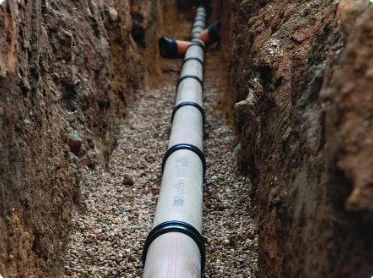
Underground sewer pipe materials and installation

PVC Sewer Pipe

PVC is commonly used for underground drainage applications when the specified pipe product and installation meet applicable requirements.

Its smooth interior supports wastewater flow, and it is not subject to the same internal corrosion mechanisms as cast iron.

However, PVC still requires appropriate support, bedding, connections, and protection from external loads.

Improper installation can lead to deformation, joint problems, or other failures.

ABS Drainage Pipe

ABS is another plastic piping material used in certain drainage and sewer applications.

Its suitability depends on the approved application and applicable code requirements.

When connecting ABS to another pipe material, the transition must use an approved fitting or joining method.

Not every plastic pipe product is interchangeable.

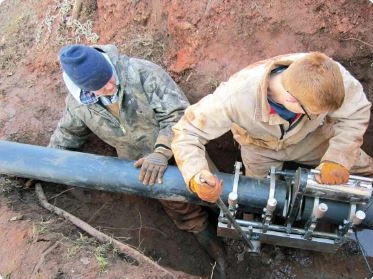
HDPE Replacement Pipe

High-density polyethylene, or HDPE, is commonly associated with certain trenchless replacement methods, including pipe bursting.

Its flexibility and available joining systems can make it suitable for specific underground installations.

The pipe type, wall thickness, joint design, and installation method must match the engineered application.

Existing Cast Iron and Clay Pipes

Older properties may have cast iron, clay, or other sewer pipe materials.

When these pipes are replaced, the contractor must evaluate how the new material will connect to any remaining existing pipe.

The presence of clay or cast iron does not automatically mean the pipe has failed.

Replacement decisions should be based on condition rather than material alone.

IRVINE SEWER LINE GUIDE

Traditional Excavation for Sewer Line Replacement

Traditional replacement involves exposing the affected underground piping so it can be removed and new piping installed.

It may be the preferred approach where the pipe has collapsed, alignment needs correction, or trenchless methods are unsuitable.

01

Locating Underground Utilities

Before excavation, underground utilities must be appropriately identified.

Gas, water, electrical, communications, and other buried services may be near the sewer route.

Utility information and site investigation help reduce the risk of accidental damage.

02

Planning the Excavation

The excavation plan depends on pipe depth, soil conditions, surrounding structures, and access.

A shallow pipe in an open yard presents different conditions from a deep line beneath a driveway.

Excavations must be managed using appropriate safety practices, including protection from trench collapse.

Property owners should never enter an unprotected excavation.

03

Removing Damaged Sewer Piping

Once the affected pipe is safely exposed, the damaged material can be removed according to the agreed scope.

Connections to remaining serviceable piping must be evaluated.

The replacement should not leave known defects immediately beside a newly installed section without addressing their significance.

04

Installing the New Pipe

New sewer piping must be installed with suitable bedding, alignment, slope, fittings, and connections.

For gravity drainage, maintaining the appropriate flow path is essential.

Pipe support is important because poor bedding can contribute to settlement or deformation.

05

Backfilling and Restoration

After required checks and inspections, the excavation is backfilled using suitable materials and compaction procedures.

Restoration may involve landscaping, concrete, paving, or other surfaces.

The scope of restoration should be clarified before work begins.

IRVINE SEWER LINE GUIDE

Can a Sewer Line Be Replaced Without Digging a Full Trench?

Sometimes. Certain sewer replacement projects may qualify for trenchless techniques.

One example is pipe bursting, which installs new piping along the route of an existing pipe while displacing the old material.

This can reduce the need for continuous excavation, but it does not eliminate all digging.

Trenchless sewer replacement alternative

When Pipe Bursting May Work

Pipe bursting may be considered when the existing sewer route is suitable, access can be established, and surrounding utilities can be protected.

The contractor must evaluate pipe material, diameter, alignment, nearby structures, and underground clearance.

A project may require entry and receiving pits.

When Trenchless Replacement Is Not Suitable

Severe misalignment, difficult access, incompatible pipe conditions, or surrounding utilities may prevent trenchless replacement.

The method also may not correct an existing slope problem that requires regrading.

A traditional excavation approach may be more appropriate in those situations.

For a detailed comparison, explore our trenchless sewer repair options in Irvine.

Replacement vs. Pipe Lining

Pipe bursting installs a replacement pipe.

Pipe lining rehabilitates a suitable existing pipe by creating an internal lining system.

These are different procedures with different requirements.

A badly collapsed pipe may be unsuitable for lining, while another pipe with suitable geometry may qualify for rehabilitation.

The choice should follow inspection and site evaluation rather than preference for a particular technology.

FROM FIRST CALL TO FINAL CHECKS

The Sewer Line Replacement Process

The following stages describe a typical replacement project. The actual operating business should confirm its specific procedures before presenting them as a company commitment.

Pre-replacement sewer camera inspection
01

Step 1 — Review Symptoms and Existing Records

The assessment begins with the drainage problem and any available information about previous repairs.

Inspection recordings, property plans, and known pipe materials may help guide the investigation.

02

Step 2 — Inspect and Locate the Failed Pipe

A CCTV inspection may identify visible defects and help define the affected section.

Compatible locating equipment may be used to estimate the defect's underground position.

A severely obstructed or collapsed pipe may require additional investigation because a camera cannot always pass through it.

03

Step 3 — Select the Replacement Scope

The proposed replacement length should be based on the extent of damage and the remaining pipe condition.

The contractor should explain whether partial replacement, full replacement, or another method is appropriate.

04

Step 4 — Plan Permits, Access, and Utilities

Before work begins, the project may require permits, utility coordination, excavation planning, and property access arrangements.

Work involving shared infrastructure may need additional approvals.

05

Step 5 — Remove or Replace the Existing Line

The contractor proceeds with the agreed installation method.

For open excavation, the damaged pipe is exposed and replaced.

For suitable trenchless replacement, new piping may be installed through a specialized method such as pipe bursting.

06

Step 6 — Complete Connections and Checks

The new pipe must connect properly to the remaining drainage system.

Appropriate testing, inspection, or camera evaluation may be required depending on the work and governing requirements.

07

Step 7 — Backfill and Restore the Property

Following the necessary approvals and checks, excavated areas are restored according to the agreed scope.

The contractor should explain any remaining restoration work and relevant maintenance information.

TAILORED TO THE PROPERTY

Sewer Line Replacement for Irvine Homes

Residential sewer replacement can involve lawns, courtyards, patios, driveways, and building access limitations.

The underground pipe route matters more than the appearance of the property from the street.

Single-Family Homes

A sewer lateral may travel from the building toward a connection serving the local sewer system.

Replacement planning should account for buried utilities, access points, landscaping, and finished surfaces.

The homeowner should understand whether work is limited to one damaged section or involves a longer pipe run.

Townhouses and Condominiums

Shared developments may have common drainage lines or sewer connections serving multiple units.

Pipe ownership and repair responsibility can depend on governing documents, easements, and other property arrangements.

Before major work, confirm who can authorize access and approve repairs.

Sewer Replacement Near Foundations

Pipe replacement near a building foundation requires careful planning.

Excavation location, depth, and soil support may affect the available methods.

No contractor should promise that foundation-adjacent work is risk-free without an appropriate site assessment.

TAILORED TO THE PROPERTY

Commercial Sewer Line Replacement

Commercial sewer systems may serve multiple fixtures, tenants, or occupied spaces.

The work can require coordination around business operations, deliveries, pedestrian access, and essential sanitation facilities.

Planning Around Business Activity

A sewer replacement project may temporarily affect wastewater service.

Property managers should clarify which fixtures or areas may be unavailable and how the work will be scheduled.

Shared Sewer Connections

Commercial buildings may have connected drainage systems serving multiple spaces.

The project scope should identify the affected pipe and its relationships to other connections.

Surface Restoration

Replacing piping beneath a parking lot or service area may involve paving, traffic control, and other restoration considerations.

The proposed scope should explain what surfaces will be disturbed and how they will be restored.

Sewer Line Replacement Cost in Irvine, CA

The cost of sewer replacement depends on the length and depth of the affected pipe, the installation method, access conditions, material requirements, and restoration work.

A short accessible replacement is different from a deep sewer line crossing a driveway or serving multiple units.

Learn More About Replacement Cost →
♙

Pipe Length and DiameterLonger runs need more materials and work.

▣

Depth and ExcavationDeeper work needs more planning and labor.

⚙

Pipe MaterialMaterial and connection requirements.

↔

Replacement MethodTrenchless vs. traditional excavation.

♧

Permits & InspectionsMay be required for certain projects.

⌂

RestorationConcrete, paving, and landscaping.

IRVINE SEWER LINE GUIDE

Understanding Replacement Costs

Pipe Length and Diameter

Longer replacement runs require more materials and installation work.

Pipe diameter can affect material selection, connections, and equipment needs.

Depth and Excavation Requirements

Deep excavation usually requires more planning, labor, and safety measures than shallow work.

Soil conditions and nearby utilities also affect the excavation approach.

Pipe Material and Connections

New piping must be appropriate for the installation and connected correctly to other system components.

Special transitions, cleanouts, and fittings may affect the scope.

Trenchless vs. Traditional Replacement

Trenchless methods may reduce surface disruption when conditions allow.

However, specialized equipment, access pits, and preparation can also influence project costs.

Neither method is always the cheaper option.

Permits and Inspections

Required approvals should be accounted for before work begins.

Permit and inspection requirements depend on the jurisdiction and project scope.

Concrete, Paving, and Landscaping

Restoration can be a significant part of a sewer replacement project.

A proposal should clarify whether replacing paving, landscaping, irrigation components, or other affected features is included.

Why Inspection Matters Before Pricing

A proper assessment helps identify the damaged section and establish a reasonable replacement scope.

It may prevent replacing serviceable piping without justification.

Equally, it can reveal that a limited repair would leave major defects unresolved.

Call to Discuss Sewer Replacement Costs: +1 (321) 425-1571

Describe the pipe condition and known damage so the next appropriate step can be discussed.

PROPERTY-SPECIFIC PLANNING

Irvine Sewer Laterals, Permits, and Property Conditions

Sewer replacement in Irvine should account for the authority responsible for the work location, applicable plumbing requirements, and the property's actual sewer layout.

Who Is Responsible for a Sewer Lateral?

A sewer lateral carries wastewater from a property toward the receiving sewer system.

The responsibility boundary may depend on utility rules, property ownership, easements, and the location of the connection.

Do not assume that responsibility ends at the visible property line.

Confirm the affected portion before authorizing work near a public connection.

Sewer Replacement Permits in Irvine

The City of Irvine's residential plumbing guidance generally requires a permit for sewer line replacement and other covered plumbing alterations.

The applicable submission procedure depends on the work.

Some minor residential projects qualify for a simplified online process, while more extensive work may require a different review route.

Confirm the current requirements before beginning excavation or replacement.

Irvine Landscaping and Driveway Access

Properties in Irvine may include landscaped yards, finished courtyards, attached housing, and paved driveways.

The sewer line's location affects access and restoration.

An inspection and utility assessment are more useful than assuming that a particular neighborhood has one standard sewer pipe layout.

HOA and Shared Property Requirements

Some properties may require HOA approval or coordination before excavation.

Shared pipes, easements, and common property can create additional planning responsibilities.

Confirm the relevant approvals before work begins.

QUESTIONS BEFORE YOU APPROVE WORK

How to Choose a Sewer Line Replacement Contractor

Sewer replacement involves structural, drainage, excavation, and permitting considerations.

A clear proposal is more useful than a broad promise to install a new sewer line.

Verify Contractor Licensing

California's Contractors State License Board provides public license information.

Check that the contractor holds an appropriate classification for the proposed plumbing work and verify the license status.

Ask Why Replacement Is Necessary

A replacement recommendation should explain what is wrong with the existing pipe.

Ask which defects have been identified and whether the remaining pipe has been evaluated.

Compare Partial and Complete Replacement

If full replacement is recommended, ask why a shorter repair would not be appropriate.

If partial replacement is proposed, ask whether the surrounding pipe is expected to remain serviceable.

Review Excavation and Restoration

Understand where excavation will occur and what restoration is included.

Discuss driveways, landscaping, irrigation, paving, and access before authorizing the work.

Confirm Post-Installation Checks

Ask how the new line will be checked and what documentation will be provided.

Required inspections should be part of the work plan, not an unexpected final step.

AVOIDABLE PLANNING ERRORS

Common Sewer Replacement Mistakes to Avoid

Replacing sewer piping is a significant project. Avoiding preventable planning mistakes can help reduce unnecessary work.

  • Do not approve full replacement based only on one slow drain or an unverified diagnosis.
  • Do not select a pipe material without confirming suitability for the application.
  • Do not assume trenchless work eliminates every excavation.
  • Do not overlook existing sewer connections or the condition of adjacent piping.
  • Do not treat surface restoration as automatically included unless the written scope says so.
  • Finally, do not skip required permits or inspections simply to shorten the project.
A PRACTICAL MAINTENANCE GUIDE

Maintaining a Newly Replaced Sewer Line

New sewer piping should provide an appropriate route for wastewater, but it still requires sensible use.

Simple habits protect your investment

Avoid flushing wipes, hygiene products, and other unsuitable materials.

Keep cooking grease out of kitchen drains.

Protect accessible cleanouts so future inspection or maintenance can be performed when necessary.

If unusual drainage symptoms return, investigate them rather than assuming a recently installed pipe cannot develop a problem.

Maintenance should follow the actual system condition and the contractor's installation recommendations.

Underground sewer pipe materials and installation
How do I know whether my entire sewer line needs replacement?

A complete replacement may be appropriate when the pipe has widespread deterioration, multiple serious defects, or extensive structural failure.

An isolated damaged section may instead qualify for partial replacement or another repair.

The decision should be based on the condition of the full affected run, not a single symptom.

Can I replace only the broken section of a sewer pipe?

Yes, when the damage is localized and the surrounding pipe remains serviceable.

A partial replacement can remove a failed section and connect new piping to suitable existing material.

The contractor should inspect adjacent sections and explain why the selected replacement length is appropriate.

Can sewer line replacement be completed without digging up my driveway?

Sometimes. Pipe bursting or another suitable trenchless method may reduce the amount of driveway excavation.

However, access pits and connection work may still be required.

The method depends on pipe alignment, material, utility clearance, access, and the type of failure.

How long does sewer line replacement take?

The duration depends on pipe length, depth, installation method, site access, permits, utility coordination, and restoration.

A short accessible replacement may require less time than a deeper project beneath paved surfaces.

Ask for a project-specific schedule after the contractor establishes the scope.

What pipe materials are used for sewer line replacement?

Approved underground sewer materials may include suitable PVC, ABS, HDPE, or other piping systems, depending on the application.

The correct material depends on code requirements, installation conditions, connection details, and the selected method.

Materials should not be chosen solely on price.

Is replacing a sewer line better than lining it?

Neither option is automatically better.

Pipe lining may be suitable when the existing pipe can support the selected rehabilitation method.

Replacement may be necessary when the pipe has severe collapse, alignment problems, or extensive damage that cannot be rehabilitated appropriately.

Inspection findings should guide the decision.

Does sewer replacement require a plumbing permit in Irvine?

Residential sewer line replacement generally requires a plumbing permit under City of Irvine guidance, subject to the project's applicable rules.

The process may differ depending on the work scope and property location.

Confirm current permit and inspection requirements before the project begins.

Will sewer replacement damage my landscaping?

The amount of disturbance depends on the pipe location and selected installation method.

Traditional excavation may affect lawns, plants, irrigation, concrete, or paving along the work area.

A suitable trenchless method may reduce disturbance but cannot guarantee that landscaping remains untouched.

Does homeowners insurance cover sewer line replacement?

Coverage depends on the policy, cause of failure, endorsements, and exclusions.

Some policies offer optional service-line coverage, while ordinary wear or deterioration may be treated differently.

Review the actual policy and discuss the circumstances with the insurer rather than assuming replacement costs are covered.

What should I ask before approving sewer replacement?

Ask what damage was found, which pipe sections will be replaced, what material will be installed, and whether trenchless options were evaluated.

Also clarify permits, excavations, restoration, connections, inspections, and any circumstances that could change the proposed scope.

A written explanation makes competing proposals easier to compare.

Call About Sewer Line Replacement in Irvine, CA

A severely damaged sewer line may require partial or complete replacement, but the work should be based on the actual condition of the underground pipe.

Understanding the replacement scope, installation method, access requirements, and restoration plan can help you make a more informed decision.

Whether your sewer lateral runs beneath a landscaped yard, patio, driveway, or commercial property, the right approach depends on the findings and site conditions.

Call to Discuss Sewer Line Replacement: +1 (321) 425-1571

Irvine, California — Underground Sewer Pipe Replacement Information

☎   Call Now +1 (321) 425-1571Schedule an Inspection
☎   Call Now +1 (321) 425-1571