SEWER PROBLEM GUIDE — IRVINE

Cracked Sewer Pipe Repair
in Irvine, CA

A crack in an underground sewer pipe can lead to recurring blockages, root intrusion, wastewater leakage, or more serious pipe damage. Because sewer lines are buried beneath yards, driveways, and buildings, property owners may notice drainage problems long before they know where the damage is located.

If you suspect a cracked sewer pipe in Irvine, California, the first step is determining whether the pipe has an isolated fracture, a damaged joint, or more extensive deterioration.

Not every cracked sewer pipe needs full replacement. Some defects can be corrected through localized excavation and repair. Other pipes may qualify for internal rehabilitation, while severely damaged sections may need to be removed and replaced.

The appropriate method depends on the crack's location, severity, pipe material, alignment, and surrounding conditions.

A useful inspection should explain what has been found and why the recommended repair is appropriate.

📍

Proudly Serving
Irvine, CA
And Surrounding
Communities

⬡Local Irvine
Experts
⚙Advanced
Diagnostic Equipment
♟Honest Recommendations
& Lasting Solutions
◷Fast Response
For Urgent Problems
☎

Call About Cracked Sewer Pipe Repair: +1 (321) 425-1571

Describe your drainage symptoms, previous cleaning work, and whether a sewer camera inspection has identified visible pipe damage.

UNDERSTANDING THE PROBLEM

What Happens When an Underground Sewer Pipe Cracks?

A sewer pipe is designed to carry wastewater away from the property through an enclosed drainage system.

When a crack develops, it creates a potential weakness in the pipe wall.

The consequences depend on the size, position, and severity of the defect.

Small Cracks May Not Immediately Block Drainage

A small crack does not always prevent wastewater from moving through the pipe.

Some defects are found during routine inspection even when the connected fixtures appear to drain normally.

However, a visible crack should be evaluated rather than ignored.

The pipe material, surrounding support, and condition of nearby joints help determine whether repair is necessary.
Larger Fractures Can Affect Wastewater Flow

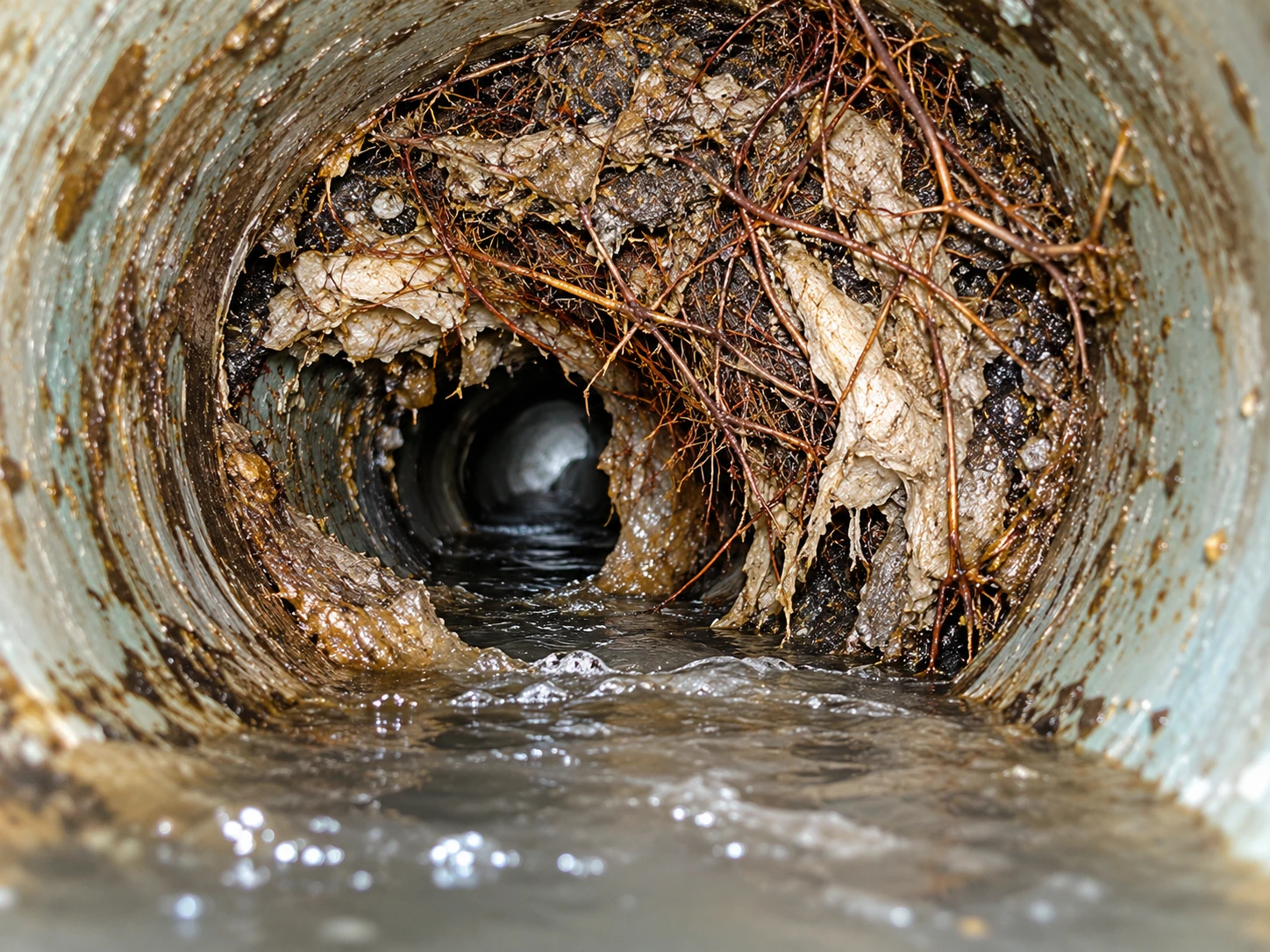
A more severe fracture may distort the pipe's shape or create an obstruction.

Debris can collect around damaged edges, and the restriction may become worse over time.

In serious cases, the affected section may no longer maintain an open path for wastewater.

Cracks Can Provide Entry Points for Roots

Tree roots may enter sewer piping through cracks, deteriorated joints, or other openings.

Once inside, they can trap waste and contribute to recurring blockages.

Removing the roots may restore flow temporarily without correcting the crack.

Wastewater May Escape Through Damaged Areas

A crack can create a potential pathway for wastewater to escape into surrounding soil.

However, finding a crack on camera does not automatically prove active leakage.

Whether leakage is occurring may depend on the defect, wastewater level, and surrounding conditions.

Additional testing may be required when leak confirmation is important.

Warning Signs of a Cracked Sewer Pipe

Cracked sewer lines do not always produce obvious symptoms.

Some of the warning signs overlap with ordinary drain blockages or other plumbing problems.

Recurring sewer blockage in damaged pipe

Recurring Sewer
Blockages

If a sewer line repeatedly clogs after cleaning, an underground pipe defect may be contributing to the problem.

A crack or damaged joint can allow roots or surrounding material to enter.

The damaged area may also trap waste.

However, repeated blockage does not prove that the pipe is cracked.

Diagnosing multiple slow drains

Multiple
Slow Drains

Several fixtures draining slowly at once can indicate a restriction in shared drainage piping.

A cracked or displaced underground section may contribute to that restriction.

Other causes include grease buildup, roots, or accumulated debris.

The symptoms should be evaluated before choosing a repair.

Sewage backup from damaged sewer line

Sewage
Backups

Wastewater may back up through a shower, toilet, or floor drain when a downstream restriction prevents normal flow.

If sewage enters occupied areas, stop using affected fixtures and keep people away from contaminated wastewater.

Read our sewer backup repair guide for more about backup patterns and appropriate safety precautions.

Investigating persistent sewer odors

Persistent
Sewer Odors

Sewer odors can arise from several sources, including dry traps, venting problems, blockages, and defective piping.

An underground crack may be one possible cause.

The location and timing of an odor can provide clues, but smell alone cannot confirm a broken pipe.

Unusual wet area above sewer line

Unusual Wet Areas
in the Yard

A persistently wet area above underground piping may raise concern about leakage.

However, irrigation problems, surface drainage, and other underground utilities can produce similar conditions.

Further investigation is needed before attributing the moisture to a sewer crack.

IRVINE SEWER PROBLEM GUIDE

Common Causes of Sewer Pipe Cracks

Underground sewer piping can develop damage because of material deterioration, movement, installation problems, or external forces.

Understanding the possible cause helps determine whether one section can be repaired or whether a broader condition must be addressed.

Aging and Material Deterioration

Some older sewer systems use cast iron or vitrified clay piping.

Cast iron can experience corrosion, while clay piping may develop fractures or deteriorated joints.

However, age alone does not prove a pipe requires replacement.

The actual condition is more important than its installation year.

Ground Settlement

Underground pipes depend on adequate support.

When surrounding soil settles unevenly, parts of a sewer line may shift or lose support.

This can place stress on joints or pipe walls.

The resulting damage may include cracks, joint separation, or changes in alignment.

Tree Root Intrusion

Roots often take advantage of existing openings.

As they grow within a crack or defective joint, they may worsen certain defects and contribute to blockages.

The surrounding pipe condition should be evaluated after root removal.

Learn more about tree roots in sewer lines and why clearing roots does not necessarily repair the entry point.

Poor Pipe Bedding or Installation

Underground pipe requires appropriate bedding, alignment, and backfill.

Insufficient support or improper installation can create concentrated loads and contribute to deformation or damage.

A repair should consider whether the original support conditions need correction.

External Loads and Physical Damage

Excavation, construction activity, heavy loading, or accidental contact with underground utilities can damage buried sewer piping.

The severity depends on pipe depth, material, surrounding support, and the force involved.

KNOW WHAT YOU ARE DEALING WITH

Different Types of Sewer Pipe Damage

Not all visible pipe defects have the same significance.

The type of crack and the condition of adjoining sections influence the repair decision.

Longitudinal Cracks

A longitudinal crack runs generally along the length of the pipe.

Its significance depends on its extent, whether the pipe has deformed, and whether other damage is present.

Circumferential Fractures

A circumferential crack runs around part or all of the pipe's circumference.

A severe fracture may affect the pipe's structural continuity.

Additional evaluation may be necessary to determine whether a localized section can be replaced.

Separated or Offset Joints

A joint defect occurs where two pipe sections no longer connect properly.

An offset may interfere with wastewater flow or allow roots and surrounding materials to enter.

A joint repair must address both the connection and any relevant alignment problem.

Broken or Missing Pipe Sections

More extensive damage may leave part of the pipe wall broken or displaced.

These conditions can require excavation or replacement rather than simple cleaning.

A DIAGNOSIS-LED APPROACH

How Cracked Sewer Pipes Are Diagnosed

A useful sewer inspection starts with the symptoms and available access.

The objective is to identify the suspected defect, determine its location, and assess the condition of nearby pipe sections.

Sewer camera inspection of a cracked pipe
01

Initial Drainage Assessment

A technician may ask which fixtures are affected, when problems began, and whether earlier cleaning restored flow.

Information about previous repairs or construction may help guide the investigation.

02

Sewer Camera Inspection

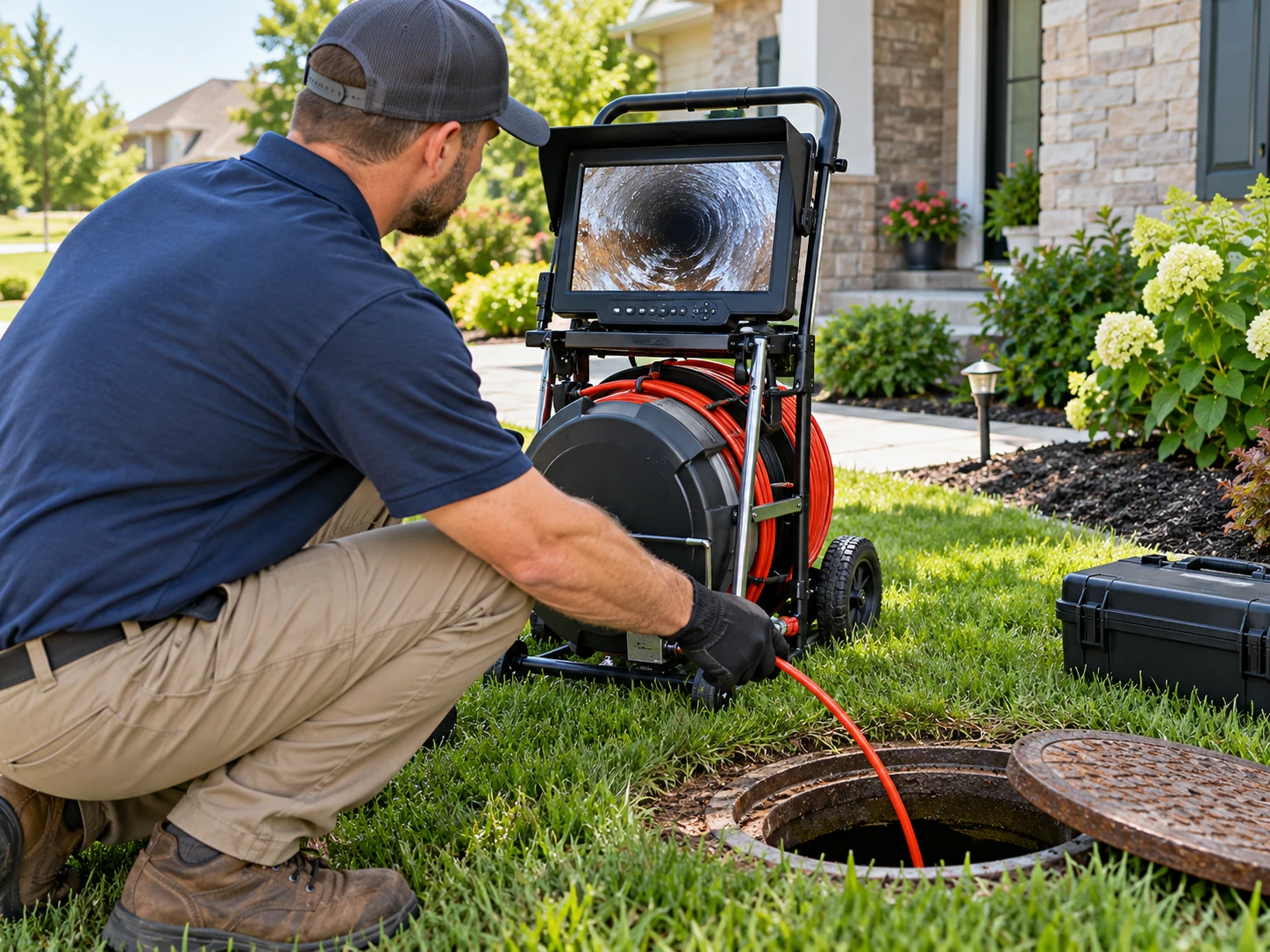
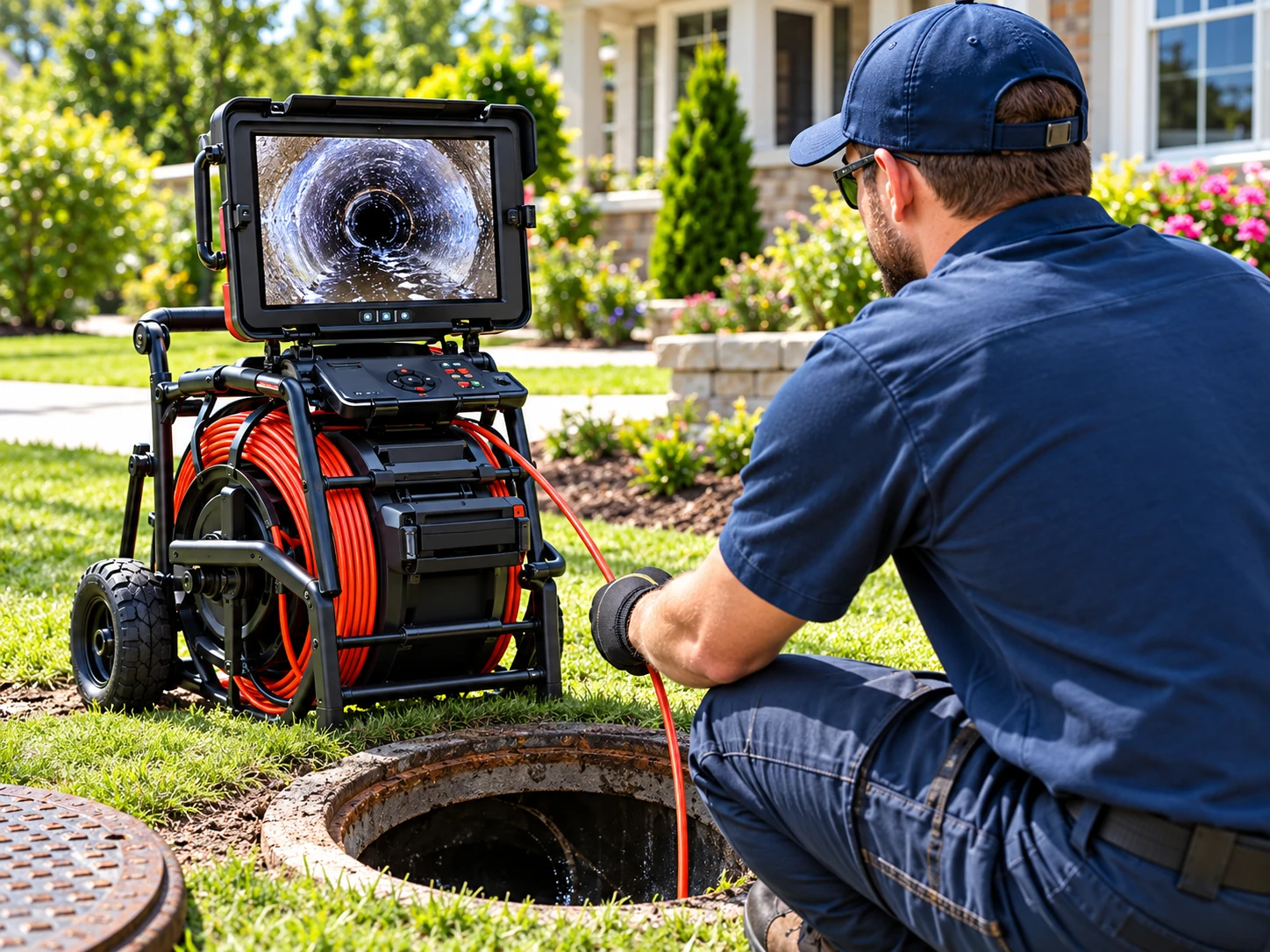
A CCTV camera can examine accessible parts of the sewer pipe from the inside.

It may reveal visible cracks, separated joints, corrosion, roots, or standing water.

The pipe may need cleaning before useful footage can be obtained.

Our sewer camera inspection guide explains the process and its limitations.

03

Locating the Damaged Section

Compatible locating equipment may help estimate the position of a visible defect underground.

This information can assist with targeted excavation and repair planning.

Location estimates must be interpreted within equipment and site limitations.

04

Evaluating Surrounding Piping

The damaged section should not be considered in isolation.

If adjacent piping is heavily deteriorated, repairing one crack may leave other significant problems unresolved.

Conversely, a single defect in an otherwise serviceable pipe may not justify complete replacement.

05

Additional Testing When Needed

A camera shows visible internal conditions, but it cannot always confirm active leakage or external structural support.

Some situations require other testing or a site evaluation.

When leakage is suspected, see our sewer leak detection guide.

IRVINE SEWER PROBLEM GUIDE

Repair Options for a Cracked Sewer Pipe

The appropriate repair method depends on the severity and location of the defect.

There is no single repair technique that works for every underground sewer pipe.

Localized Sewer Pipe Repair

A localized repair targets a limited damaged section.

Where access allows, the affected area may be excavated, the damaged pipe removed, and a suitable new section installed.

Approved connections are needed between the new and existing materials.

This approach may be reasonable when surrounding piping remains serviceable.

Sewer Pipe Lining

Certain damaged pipes may qualify for internal rehabilitation.

A suitable lining system can address some cracks and defective joints without removing the entire pipe run.

However, lining requires appropriate pipe geometry, preparation, and structural suitability.

Read our sewer pipe lining guide for a detailed explanation of the installation process.

Partial Sewer Line Replacement

When damage affects a longer section, partial replacement may be needed.

The proposed length should reflect the identified defects and the condition of adjoining piping.

The contractor should explain why the replacement starts and ends at the selected locations.

Complete Sewer Line Replacement

Replacement of a longer run may be appropriate when deterioration is extensive or multiple serious defects make localized repairs impractical.

The work can involve excavation, new pipe installation, connections, and restoration.

Learn more about sewer line replacement in Irvine.

Trenchless Replacement

Certain underground pipe routes may qualify for pipe bursting or another trenchless replacement method.

Suitability depends on access, existing alignment, surrounding utilities, and the pipe condition.

Trenchless work may still require access pits and localized excavation.

☎

Call to Discuss Cracked Sewer Pipe Repair Options: +1 (321) 425-1571

MAKING THE RIGHT CALL

Spot Repair or Full Replacement?

When Is Spot Repair Better Than Full Replacement?

An isolated crack does not automatically justify replacing the entire sewer lateral.

A spot repair may be reasonable when the defect is limited and the rest of the pipe can continue providing reliable drainage.

However, the least expensive immediate repair is not always the best long-term choice.

If nearby sections have severe deterioration, additional work may be needed later.

A useful recommendation should explain the extent of the damage, reasonable repair alternatives, and what conditions remain in the existing pipe.

Can a Cracked Sewer Pipe Be Repaired Without Digging?

Sometimes.

Certain cracked pipes qualify for internal lining or another suitable trenchless rehabilitation method.

However, significant collapse, severe misalignment, unsuitable geometry, or limited access can prevent trenchless repair.

A liner generally follows the existing pipe route and does not automatically correct a major pipe belly.

Property owners should ask what excavation remains necessary and whether the proposed method addresses the actual defect.

FROM FIRST CALL TO FINAL CHECKS

Cracked Sewer Pipe Repair Process

The exact repair process depends on the method and property conditions.

A typical project may involve several stages.

01

Assess the Existing Problem

The work begins with the reported symptoms and available inspection information.

02

Identify the Defect

Camera inspection and suitable locating methods may help determine where the damage is located.

03

Compare Repair Methods

The findings are used to consider localized repair, rehabilitation, or replacement.

04

Plan Access and Approvals

The work may require utility locating, excavation planning, permits, and inspection arrangements.

05

Complete the Repair

The selected repair method is performed according to the agreed scope.

06

Check the Completed Work

Appropriate post-repair checks and required inspections help confirm that the work has been completed as intended.

TAILORED TO THE PROPERTY

Cracked Sewer Pipes in Residential and Commercial Properties

A cracked residential sewer lateral may run beneath landscaping, a driveway, a patio, or a building slab.

The route can strongly influence repair access.

Pipes Beneath Driveways

A damaged pipe beneath finished concrete may require excavation and restoration.

Where conditions are suitable, a trenchless method may reduce surface disturbance.

Underground Pipes Near Buildings

Damage close to foundations or structures requires careful access planning.

Excavation should consider surrounding soil support and buried utilities.

Shared Residential Properties

Townhouses, condominiums, and HOA properties may have shared sewer connections.

Responsibility and repair authorization should be confirmed before major work.

Commercial Sewer Pipe Repair

Commercial buildings may have larger or more complex drainage systems.

A cracked pipe can affect several fixtures or tenant spaces.

Repair planning should consider business activity, wastewater use, access, and possible service interruptions.

A property manager may need to coordinate inspections and repairs around occupied areas.

COST GUIDANCE

Cracked Sewer Pipe Repair Cost in Irvine, CA

Cost depends on the damage and the work needed to correct it.

An isolated crack in an accessible location is different from several broken pipe sections beneath a concrete driveway.

Damage Severity

A short fracture may require less work than widespread structural deterioration.

Pipe Depth and Accessibility

Deep pipes and restricted work areas can increase excavation and safety requirements.

Pipe Material

Different materials may require different repair components and transitions.

Selected Repair Method

Localized excavation, pipe lining, and replacement involve different equipment and labor.

Permits and Inspections

Required approvals affect project planning.

Surface Restoration

Concrete, landscaping, paving, or irrigation restoration may add to the scope.

An estimate should explain the proposed repair and what is excluded.

☎

Call to Discuss Cracked Sewer Pipe Repair Costs: +1 (321) 425-1571

PROPERTY-SPECIFIC PLANNING

Irvine Sewer Laterals, Permits, and Local Conditions

Sewer repair planning in Irvine should account for the property's underground layout and the authority responsible for the affected piping.

Sewer Lateral Responsibility

A sewer lateral carries wastewater from the building toward the receiving sewer system.

Responsibility may depend on utility rules, property ownership, and easements.

The visible property boundary does not necessarily establish the maintenance boundary.

Plumbing Permits

The City of Irvine's published guidance identifies residential sewer line repairs and replacements as work generally requiring plumbing permits.

The actual approval process depends on the project.

Before excavation, confirm the relevant permit and inspection requirements.

Neighborhood and Property Conditions

Properties in Woodbridge, Northwood, Westpark, Turtle Rock, and other Irvine communities may have different sewer routes and access arrangements.

A neighborhood's age does not establish whether a particular sewer pipe is cracked.

Inspection findings should guide the repair recommendation.

QUESTIONS BEFORE YOU APPROVE WORK

Choosing a Contractor for Cracked Sewer Pipe Repair

What a Good Contractor Should Explain

A contractor should explain why the pipe is believed to be damaged and what evidence supports the recommendation.

Ask whether a camera inspection identified the crack and whether adjacent sections were evaluated.

If excavation is proposed, clarify the affected location and restoration.

If lining is recommended, ask why the pipe qualifies.

For more extensive work, request a written scope explaining permits, materials, connections, and post-repair checks.

Verify that the contractor holds an appropriate California license for the proposed work.

A PRACTICAL MAINTENANCE GUIDE

Preventing Additional Sewer Pipe Problems

Not every pipe crack can be prevented through routine maintenance.

However, avoiding unsuitable drain disposal habits may reduce blockages that complicate existing defects.

Simple habits can protect a vulnerable pipe

Do not flush wipes, hygiene products, or other unsuitable materials.

Keep cooking grease out of drains.

If roots repeatedly enter a pipe, investigate the opening rather than relying only on root cutting.

When an inspection identifies structural damage, ask whether the defect requires repair or monitoring.

Diagnosing underground sewer pipe conditions

Frequently Asked Questions About Cracked Sewer Pipes

Have a different question? Contact Us →
Can a cracked sewer pipe be repaired without replacing the whole line?

Yes, in some cases. An isolated crack may qualify for localized repair or a suitable lining method when surrounding piping remains serviceable.

The choice depends on the crack's location, severity, pipe geometry, and the condition of nearby sections.

An inspection should support the proposed scope rather than assuming the entire line has failed.

What are the signs of a cracked underground sewer pipe?

Possible signs include recurring blockages, several slow drains, sewage backups, unusual odors, and persistent moisture near the pipe route.

However, these symptoms can also result from unrelated drainage or irrigation problems.

A professional assessment is needed to determine whether a crack is present.

Can tree roots cause a sewer pipe to crack?

Roots often enter through openings that already exist.

As they grow, they may enlarge certain defects or place additional stress on damaged joints.

However, root intrusion does not automatically prove the roots caused the original crack.

The pipe should be inspected to establish the visible condition.

Can a sewer camera identify every crack?

No. A camera can reveal visible cracks within accessible pipe sections, but its view may be blocked by debris, standing water, or obstructions.

It cannot directly observe all external damage or prove every kind of leakage.

Additional evaluation may be necessary.

Is pipe lining suitable for a cracked sewer pipe?

Sometimes. Certain cracks and defective joints may qualify for lining when the existing pipe has suitable geometry and structural conditions.

Severe deformation, collapse, or alignment problems can make lining inappropriate.

The contractor should explain why the selected rehabilitation system is suitable.

How long does cracked sewer pipe repair take?

The duration depends on pipe depth, damage extent, access, repair method, permits, and restoration.

A short accessible repair may take less time than work beneath concrete or a building.

Ask for a project-specific timeline after the damage and scope are established.

Does a cracked sewer pipe always leak wastewater?

Not necessarily. A visible crack creates a potential leakage pathway, but the presence and extent of active leakage may depend on several conditions.

Camera inspection alone cannot always confirm that wastewater is escaping.

Additional testing may be needed when leak confirmation is important.

Is cracked sewer pipe repair expensive?

Costs vary widely because a small accessible repair differs from replacing a deep underground pipe.

Damage length, excavation, materials, connections, permits, and restoration can all influence the price.

A useful estimate should explain the actual work rather than rely on an unsupported flat rate.

Are permits required to repair a cracked sewer line in Irvine?

Covered residential sewer pipe repairs and replacements generally require plumbing permits under City of Irvine guidance.

The approval process depends on the work and applicable jurisdiction.

Confirm requirements before excavation or pipe replacement begins.

When should I replace a cracked sewer pipe instead of repairing it?

Replacement may be appropriate when the pipe has severe structural failure, multiple damaged sections, or deterioration that makes localized repair unsuitable.

An isolated crack may justify a different approach.

The decision should consider the surrounding pipe condition and expected performance of the repair.

Call About Cracked Sewer Pipe Repair in Irvine, CA

A cracked sewer pipe does not always mean the entire underground line needs replacement.

The appropriate solution may be a localized repair, internal rehabilitation, or replacement of a damaged section.

Understanding the actual defect and surrounding pipe condition helps avoid unnecessary work.

If you've noticed repeated sewer blockages, suspected underground leakage, or visible cracking during a camera inspection, describe the problem and ask about the next appropriate step.

Call to Discuss Cracked Sewer Pipe Repair: +1 (321) 425-1571

Irvine, California — Cracked Underground Sewer Pipe Inspection and Repair Information

☎   Call Now +1 (321) 425-1571Schedule an Inspection
☎   Call Now +1 (321) 425-1571